Your First Dozen: How to Order Raw Bar Like You've Been Coming to Menemsha for Years
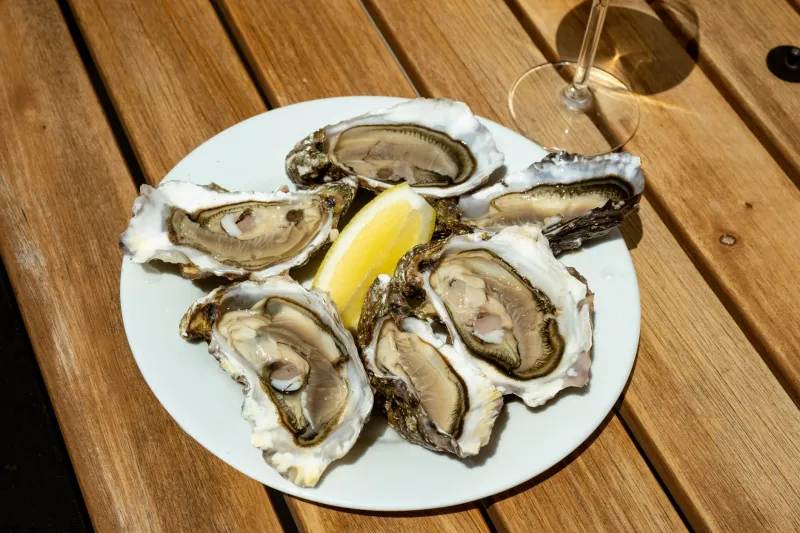
There's a moment we see at the raw bar almost every day in July. Somebody walks up, eyes the chalkboard full of oyster names, panics, and orders a fried clam plate instead. Nothing wrong with a fried clam plate — we love them too — but if you've been curious about raw bar and talked yourself out of it, this one's for you.
Eating oysters isn't a test. Nobody's grading you. But a little know-how goes a long way toward turning that first dozen from an intimidating leap into the highlight of your Vineyard trip. So here's the full playbook, straight from the folks shucking behind the counter.
Reading the Board: What Those Names Actually Mean
When you see a list like Wellfleets, Katamas, and Island Creeks on a raw bar menu, you're not looking at species — you're looking at addresses. All of these are the same Eastern oyster, Crassostrea virginica, but where they grow up changes everything about how they taste. Oysters are what the industry calls "terroir on the half shell": the salinity, algae, and mineral content of the water they're raised in ends up in the meat.
Wellfleets, from Cape Cod Bay, are the classic New England oyster — briny and clean, with a firm bite and a crisp, savory finish. They're the oyster most people picture when they picture an oyster.
Katamas come from Katama Bay, right down the Island in Edgartown. Because the bay opens to the Atlantic, they're noticeably salty — bright, oceanic, almost like biting into a wave. If you want a taste of Martha's Vineyard in one shell, this is it. Locals will tell you an oyster never travels better than a few miles from home, and we're not going to argue.
The general rule of thumb: names with a "point," "pond," or "neck" in them tend to be saltier; names with "creek," "bay," or "river" often run milder and sweeter. It's not foolproof, but it's a decent compass when the board is long.
Brine vs. Cream: Finding Your Flavor
Raw bar folks tend to sort themselves into two camps, and it's worth figuring out which one you are.
Team Brine wants that hit of ocean. High-salinity oysters like Katamas or other Atlantic-bay varieties taste sharp, salty, and clean — a jolt of cold seawater with a finish of cucumber or melon. If you love raw clams, ceviche, or just the smell of Menemsha Harbor at slack tide, start here.
Team Cream prefers something softer. Oysters from deeper, calmer, less salty waters have a plump, buttery texture and a mild, almost sweet finish. These are usually the oysters that convert people who "thought they didn't like oysters."
The smart move on your first visit? Order a mixed dozen and find out. Most raw bars — including ours — will happily split a dozen between two or three varieties. That's not a tourist move; that's exactly what the raw bar is for.
The Condiment Question: A Gentle Etiquette Primer
Every raw bar offers three things: lemon, mignonette, and cocktail sauce, and often a bottle of hot sauce within arm's reach. Here's what you should know about each.
Lemon is the universal donor. A quick squeeze brightens anything. No judgment here.
Mignonette — the sharp little sauce of vinegar and cracked pepper (sometimes shallot) — is the connoisseur's pick. It's designed to lift the oyster's flavor, not bury it. A drop or two is plenty. If you douse the whole shell, you're mostly eating vinegar.
Cocktail sauce is where opinions get loud. Purists say it masks the oyster. Realists say it's delicious. Our official stance: it's your dozen, do what makes you happy. Just know that if you're trying to actually taste the difference between a Katama and a Wellfleet, go easy on the horseradish.
Hot sauce is the great equalizer. A few shakes of Tabasco or a vinegar-forward local pepper sauce is a time-honored New England raw bar tradition, and nobody worth talking to will raise an eyebrow.
One etiquette note that does matter: use the little fork (or your fingers, honestly — nobody's checking) to loosen the oyster from the shell, then slurp it in one go from the wide edge. Chewing is optional but encouraged — a couple of bites releases the flavor. And yes, it's fine to drink the liquor, the briny juice already sitting in the shell. That's the good part.
The First-Timer's Playbook: Ordering Your First Dozen
Here's exactly how we'd coach a nervous first-timer at the counter:
- Start with a mixed dozen. Ask for half mild, half briny. Say the words "what do you recommend?" — shuckers love that question and it always gets you the freshest shells.
- Taste the first one naked. No lemon, no sauce. One plain oyster tells you more than six dressed ones.
- Then experiment. Lemon on the second, mignonette on the third, hot sauce on the fourth. You'll know your style by the end of the row.
- Pair it simple. A cold lager, a crisp white like a Muscadet or a local rosé, or a bottle of water with that view of the fishing boats. Fancy isn't the point — Menemsha isn't a fancy place.
- Round two is your reward. Now that you know what you like, order a full dozen of your favorite. This is the moment you stop being a tourist and start being a regular.
Why It Tastes Better Here
A last word on the setting, because it matters more than any condiment. Oysters are at their best within hours of coming out of cold water, and on the Vineyard that distance is measured in miles, not days. Add a harbor breeze, a paper plate, and the sound of the fleet coming in, and even a first dozen tastes like you've been doing this your whole life.
So skip the panic next time you're at the counter. Look at the board, ask a question, order the mixed dozen. The fried platter will still be there tomorrow — and honestly, you'll probably want both.