Quahogs, Cream, and Zero Shortcuts: The Chowder That Puts Menemsha on the Map
There's a moment on every summer trip to Menemsha when the fog burns off the harbor and you can smell it — that unmistakable mix of salt, diesel, and brine that means someone's kettle is already on the stove. If you've eaten chowder at The Bite or any of the shacks along Menemsha Creek, you know it tastes different from the bowl you get in Boston or Portland. You just might not know why.
We asked around the harbor, and the answer, it turns out, starts in the mud.
It Starts with the Quahog
Most New England chowder begins with the quahog too — but not like this.
"Down here, we don't buy chowder clams in a five-pound bag from a wholesaler," says one third-generation fisherman who sells off his boat at the Menemsha dock. "We dig them. My grandmother dug them. You know where your clams came from because you were there when the rake went in."
The local preference is for whole quahogs — the big, chewy, hard-shelled clams that get less tender the bigger they get. Where a Boston kitchen might use chopped surf clams or softer littlenecks for a more uniform texture, Menemsha cooks lean into the quahog's bite. The clams are shucked, chopped roughly, and — this is the key — added late, so they hold their character instead of dissolving into the broth.
That means every spoonful has texture. Little chunks of clam that actually taste like the ocean floor they came out of. It's chowder with a jaw workout, and locals wouldn't have it any other way.
The Broth: Salt Marsh, Not Salt Shaker
Here's where things get a little theological.
Boston-style chowder, the kind tourists associate with Faneuil Hall and clam-shack chains, is thick — often thickened with flour, sometimes to a near-chowder-pudding consistency. Maine's version runs thinner and milkier, more of a creamy broth that lets the potato shine.
Menemsha chowder sits somewhere in between, but the difference isn't really thickness. It's the base.
"We use the quahog liquor," explains a cook who's been ladling chowder on the Vineyard for over twenty years. "That's the juice in the shell. You don't pour it off. That's your salt. That's your flavor. You render a little salt pork or bacon, sweat your onion in the fat, add your potato and that liquor, and you let it go. The salt isn't from a shaker — it's from the harbor."
That brine is what people taste when they say Menemsha chowder tastes "cleaner" or "more like the ocean." It's not seasoning. It's provenance.
Then there's the dairy question. Vineyard cooks are famously divided — some go heavy cream, some go with milk and a pat of butter floating on top at service, and a few old-timers swear by a splash of the brine added at the very end to cut the richness. There's no single recipe. There's a family of recipes, all pointed in the same direction.
Recipes That Never Got Written Down
Ask for a Menemsha chowder recipe and you'll get a shrug, a laugh, or a story.
"My mother's recipe was 'potatoes, onions, quahogs, cream, and don't rush it,'" one harbor regular told us, laughing. "She never measured anything in her life."
That's not unusual for fishing families on the Vineyard. Chilmark and Aquinnah kitchens historically cooked by feel and by what the boats brought in that day. If the quahogs were small, you used more of them. If the cream was running low, the chowder ran a little thinner and nobody complained. The recipe wasn't a document — it was a rhythm, passed along by watching someone else's hands.
What the versions share is a stubborn minimalism. No flour. No thyme-and-bay-leaf perfume cabinet. No corn (this is not Rhode Island). Just pork fat, onion, potato, quahog, dairy, and patience — plus a black pepper grinder that gets used with abandon.
The Taste Test: Menemsha vs. the Mainland
So how does it stack up? We lined up three bowls: a classic Boston-style chowder, a Maine-style milk broth, and a Menemsha pot made with dock-side quahogs.
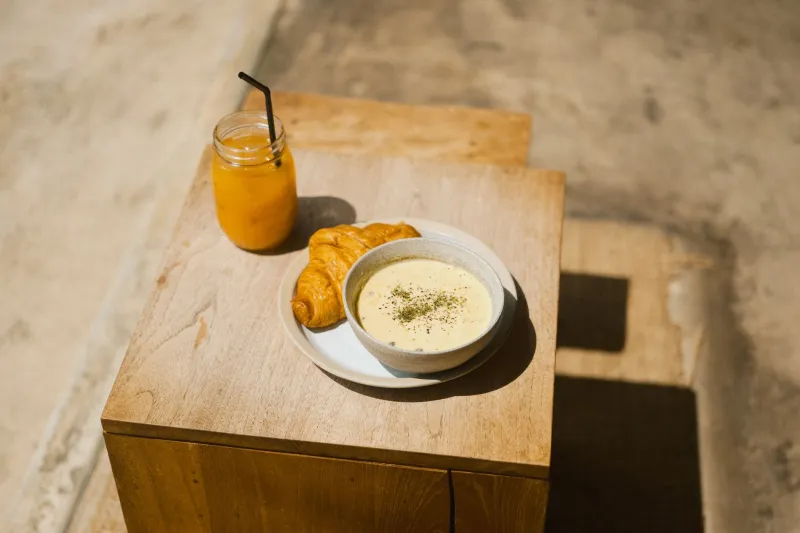
The Boston bowl was velvety and rich — pleasant, but a little one-note, the thickness doing most of the work. The Maine version was lighter and drinkable, with a lovely sweetness, though the clams felt like a garnish. The Menemsha bowl? It tasted like a place. The brine came through first, then the smoke of the pork, then the clam — chewy, mineral, real. The potato held its shape. The cream was there to carry the flavor, not bury it.
If Boston chowder is comfort food and Maine chowder is a weeknight supper, Menemsha chowder is a postcard you can eat.
Get the Real Thing
You don't need a boat to make it — though it helps to know someone with a rake. Use the biggest quahogs you can find, save every drop of the liquor, resist the flour, and add the clams in the last ten minutes so they stay proud of themselves.
Or, easier: come to the harbor. Order a cup, grab a bench, and watch the boats come in while you eat. That's the ingredient no recipe card can list.
Chowder season runs all summer — and honestly, on the Vineyard, so does everything else worth eating.