Four A.M. in the Harbor: The Quiet Hours Before Menemsha Eats
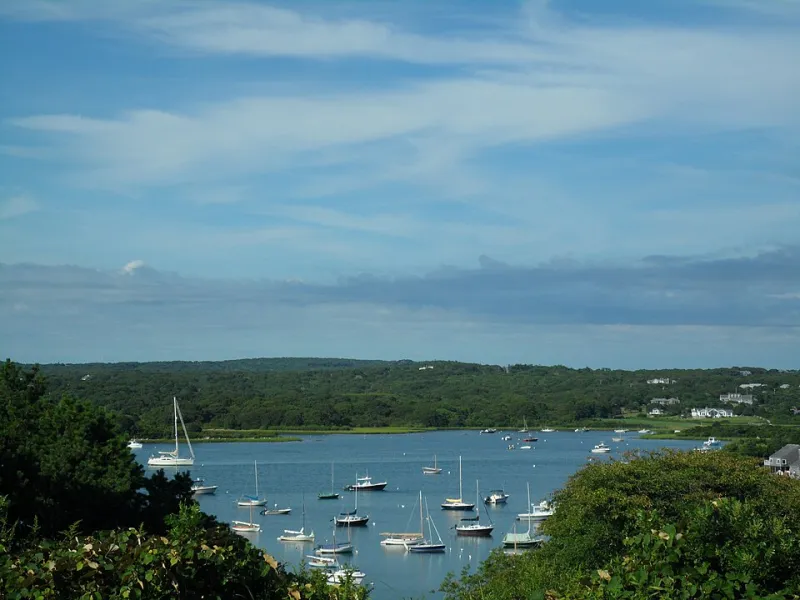
Photo: EgorovaSvetlana, CC BY-SA 4.0, via Wikimedia Commons
The first thing you notice about Menemsha at four in the morning is the sound. Not the foghorn, not the gulls — those come later. It's the low diesel rumble of a lobster boat idling at the fuel dock, headlights cutting through the fog, a thermos of coffee being passed over a gunwale. The village that will feed thousands of summer visitors by noon is already wide awake.
The Haul Comes First
Captain Ray BenDavid has been fishing out of Menemsha for over thirty years, and his morning hasn't changed much since his twenties. He runs a string of traps off Squibnocket, hauling by hand in the dark while most of Martha's Vineyard is still asleep. By the time the sun cracks over the Elizabeth Islands, his tank is full of bugs — hard-shell lobsters, some shorts he'll toss back, the keepers he'll cull and band right there on deck.
"People ask what makes a Menemsha lobster different," Ray says, banding claws with a practiced flick. "It's not the lobster. It's that it was in the ocean four hours ago. You can't fake that."
Down the dock, the scene repeats itself. Draggers come in with flounder and scup. The clam boats rake cherrystones and steamers from the sandy shallows of Menemsha Pond. Everything funnels toward the same place: the harbor's fish markets, where ice is cheaper than sleep and the scale never lies.
The Market Is the Middleman — Barely
Here's the thing about the Menemsha fish market: it's less of a middleman and more of a doorway. Menemsha Fish Market and the other harbor outfits buy directly off the boats, often from captains they've known for decades. There's no truck from Boston, no warehouse, no distributor taking a cut. A lobster comes out of Ray's trap, gets iced at the market, and might be steamed and picked by lunch.
That's the whole supply chain. Boat. Market. Pot.
The market crew works fast in the morning — culling, sizing, icing down quahogs and oysters, sorting the day's bluefish and stripers into bins. Regulars — meaning the shack cooks — start drifting in around eight, eyeballing what came in and calling dibs. If the fluke looks good, that's the special. If the clam supply is thin, the chowder recipe flexes accordingly.
Into the Kitchen
At the counter, the morning is about prep. Lobsters get steamed in big batches, cooled, and picked clean for rolls. Belly clams get shucked, rinsed, and dredged to order. The fryers come on. Someone hauls out the same battered squeeze bottles of melted butter that have been refilled a hundred thousand times.
"We don't really have a menu that's set in stone," one cook told us, picking meat from a mountain of steamed claws. "We have what the boats brought us. That's the menu."
The math is staggering for a village of a few dozen year-round residents. On a peak July day, the harbor's handful of counters will serve thousands of lobster rolls, bushels of fried clams, cups of chowder, and paper cones of onion rings to a crowd that lines the seawall with plates on their laps. All of it traces back to a morning haul that fit in the hold of one boat.
Why 'Fresh-Caught' Actually Means Something Here
Every coastal town in America slaps "fresh-caught" on a sign. In Menemsha, the phrase is just... accurate. It's a working fishing village that happens to feed tourists, not a tourist trap that happens to have fishing boats. The harbor is a real port, home to one of the last active fishing fleets on the Vineyard, and the folks behind the counter are often married to, related to, or former crewmates of the captains at the dock.
That proximity shows up in the food. A lobster roll here isn't a recipe so much as a report — of what the water gave up that morning, what the tide brought in, what the wind let the boats go out and get. When the stripers are running, they're on the menu. When a storm keeps the fleet at the dock, everybody makes do.
Come Hungry, Come Early
If you're visiting this summer, here's the local playbook: skip the noon crush and get to the harbor by 11 a.m., or come after 3 when the line thins. Walk the dock and watch the boats come in — it's not a show put on for visitors; it's just Tuesday. Order the lobster roll cold with a sweep of mayo, or hot with butter if that's your church. Get the fried clams with bellies, because you're here and you should.
Then take your paper plate to the jetty, watch the sunset do its famous thing over the water, and remember: what you're eating was swimming this morning.
In Menemsha, that's not marketing. That's just how lunch works.